
Pitalito, Huila, Colombia | 1630 masl | Gesha Washed | Pink Bourbon Washed
Don Bolney and Doña Adeleine fled their homeland in Tolima in 2011, as the armed conflict was creating excessive stress and risks for their family. Through a friend, they had the opportunity to purchase a 7-hectare farm in Pitalito, in exchange for the 13-hectare farm they owned in Tolima. Due to security concerns, land values in Tolima were significantly lower than in southern Huila at the time.
When they acquired the farm, the entire 7 hectares were planted with Caturra, which was devastated by leaf rust in 2015. Bolney then sold more than half of the land and replanted with Castillo. After several years of cultivating Castillo, they became disappointed by its low yields and poor cup quality, which led them to begin renovating the farm with varietals better suited to the specialty market.
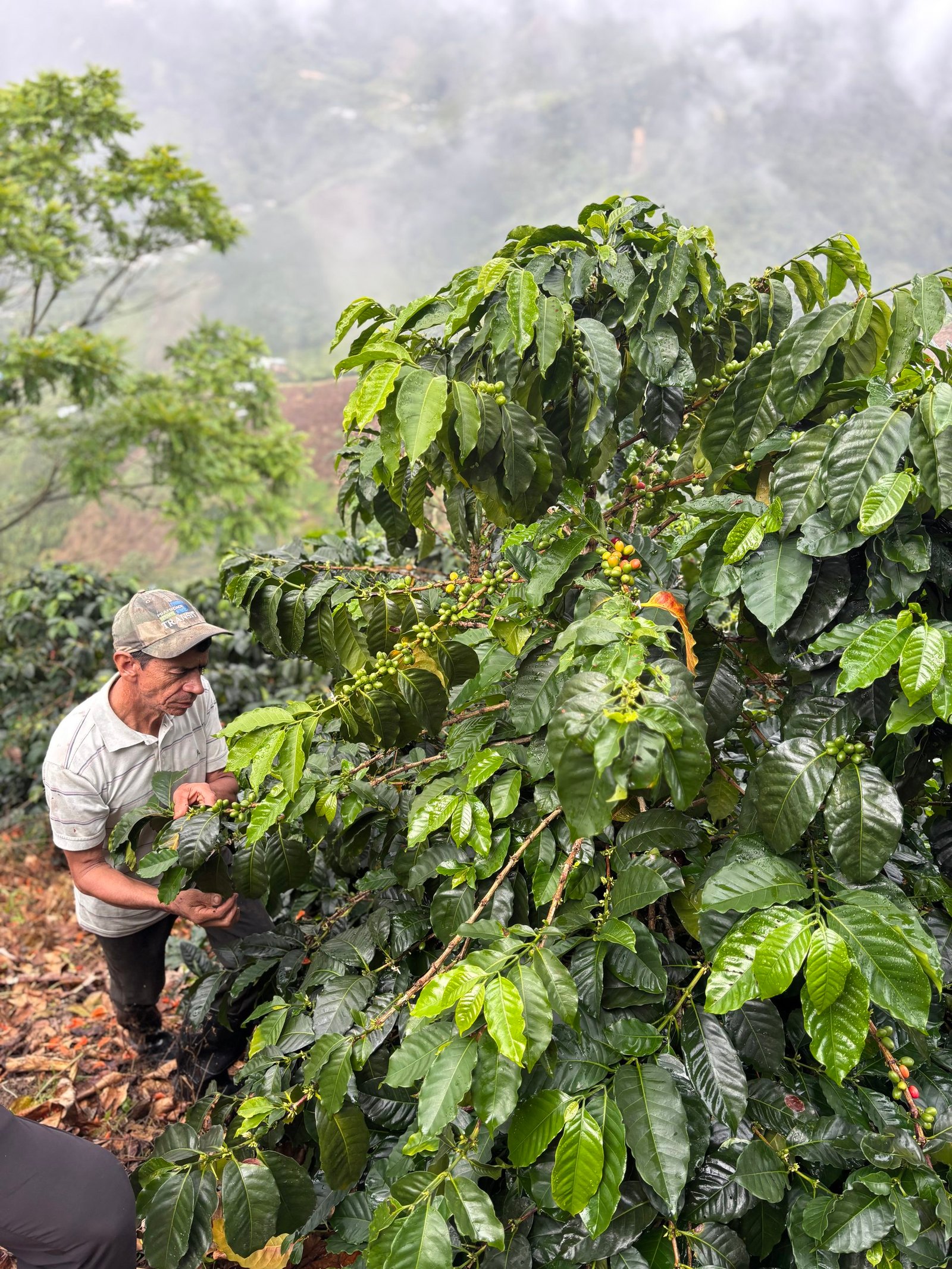
Half of the 3-hectare farm is planted with Gesha. Only 1,700 Gesha trees are planted across 1.5 hectares, resulting in a very low planting density. This is because Gesha trees grow tall and develop wide branches, requiring significantly more space.
Approximately 0.75 hectares are planted with Pink Bourbon, a highly appreciated varietal known for its excellent cup quality—linked to its Ethiopian landrace genetics—as well as its good yields and strong resistance to adverse climate conditions and pests.
The most recent addition to Bolney and Adeleine’s farm is Pacamara. Originally from El Salvador, this varietal combines the productivity of Pacas with the aromatic complexity and large, elephant-sized beans of Maragogype. Pacamara covers about 0.5 hectare.
Varietals are harvested and processed separately. However, the same process is applied to all: The cherries undergo oxidation for 48 hours, are then depulped, and the beans are subsequently fermented in water for an additional 72 hours.
It is important to acknowledgeAdeleine, his wife, in this achievement because women often work behind the scenes in the coffee businesses of smallholders.
Adeleine takes care of all the farm workers, cooks tirelessly every day for 5 to 10 people, and ensures everyone has what they need before heading out to work on the farm or in the mill.